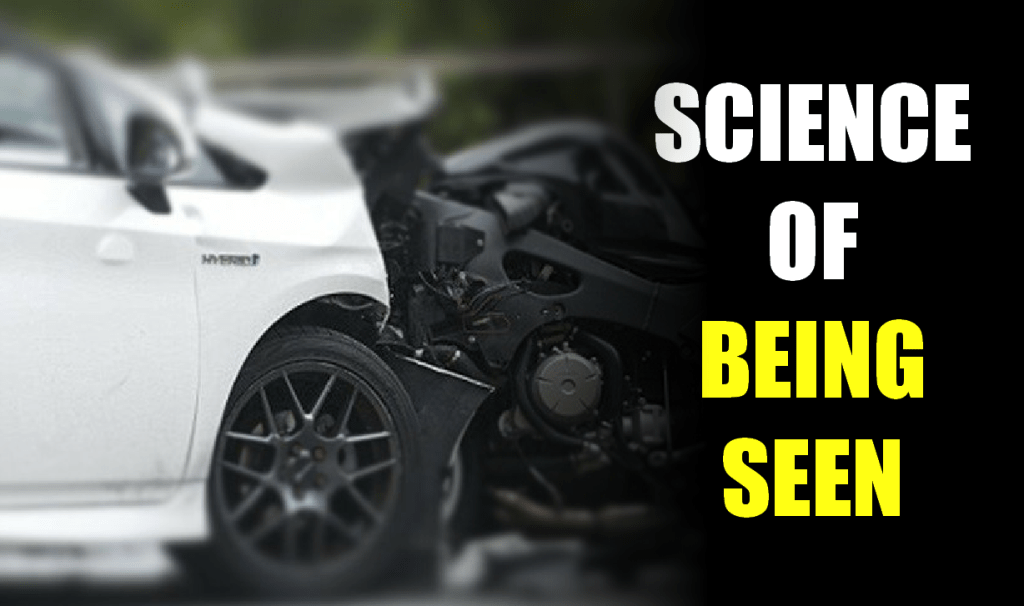
As you probably know, I’ve twice been invited out to New Zealand to work with the NZTA and ACC on the Shiny Side Up rider safety initiative. Just before delivering the ‘Science Of Being Seen’ (SOBS) presentation at Kapiti near Wellington in February 2019, I was interviewed for an item on the Newshub TV channel.
The point that I really tried to get across is that though the word ‘science’ scares people into thinking that it’s complicated stuff, it isn’t.
Science is really just about making accurate observations and drawing the correct deductions about why things happen. That’s all it is.
But ONLY when we get the science right, can we derive effective countermeasures.
Here’s the report in full:
The simple science hoping to save motorcyclists’ lives
Hitting eleven locations nationwide, Shiny Side Up is the country’s biggest bike-fest. But it’s not just leather, chrome, and stunts – it’s about saving lives.
The joint initiative between ACC’s Ride Forever programme and the NZTA is far more effective at spreading the word than pamphlets or statistics.
“It’s not them having ACC or the Government saying ‘we know what’s best for you’,” says ACC’s motorcycle programme manager Dave Keilty at the Kapiti Coast event. “This gives the riders an opportunity to learn from other experienced and qualified people.”
The simple science hoping to save motorcyclists’ lives
Hitting eleven locations nationwide, Shiny Side Up is the country’s biggest bike-fest. But it’s not just leather, chrome, and stunts – it’s about saving lives.
The joint initiative between ACC’s Ride Forever programme and the NZTA is far more effective at spreading the word than pamphlets or statistics.
“It’s not them having ACC or the Government saying ‘we know what’s best for you’,” says ACC’s motorcycle programme manager Dave Keilty at the Kapiti Coast event. “This gives the riders an opportunity to learn from other experienced and qualified people.”
Kevin Williams has been teaching safety in the UK for more than twenty years, and has been brought over to teach Kiwi riders the science of being seen. He says it’s more than putting on hi-viz and hoping for the best.
Riders can learn why other road users might not be able to see them, even if they think they might be in plain sight. One example is saccadic masking – which is simpler than the name suggests.
“Turning our heads quickly from side to side actually shuts down part of our vision, so that we only actually take snapshots, and we can miss things that are between those snapshots. And that’s typically where the bikes go AWOL,” Mr Williams says.
“And sometimes people just see bikes and don’t realise quite how quick they’re travelling, so they just get to the driver a lot sooner than the driver was expecting,” he says.
Helping riders understand why they’re not seen means they can find ways to be seen.
“Some lateral movement back and forwards across the lane may help the driver pick you up,” says Mr Williams.
Motorcycles make up around 3 percent of vehicles on the roads in New Zealand – but make up 16 percent of road deaths.
“We don’t have the protection of the shell or the airbags,” says Mr Keilty. “We are the safety belt and the airbag, that’s us. So we’ve got to be aware that we’re doing everything we can in our power not to have that crash in the first place.”
Shiny Side Up attendees are encouraged to sign up to the ACC’s Ride Forever programme. Since launching in 2012, 20,000 riders have taken classes – and they’re 27 percent less likely to crash.
“We want the younger riders to much more aware, much more safety-conscious, and have much better skills by the time they’re 40,” says Mr Keilty. “We want the over-40-year-olds to come in, sample what we’ve got, and work out there’s actually a lot still to learn.”
Learning how to be seen will ensure riders can keep coming back to events like Shiny Side Up for years to come.
Motorcycles make up around 3 percent of vehicles on the roads in New Zealand – but make up 16 percent of road deaths.
“We don’t have the protection of the shell or the airbags,” says Mr Keilty. “We are the safety belt and the airbag, that’s us. So we’ve got to be aware that we’re doing everything we can in our power not to have that crash in the first place.”
Shiny Side Up attendees are encouraged to sign up to the ACC’s Ride Forever programme. Since launching in 2012, 20,000 riders have taken classes – and they’re 27 percent less likely to crash.
“We want the younger riders to much more aware, much more safety-conscious, and have much better skills by the time they’re 40,” says Mr Keilty. “We want the over-40-year-olds to come in, sample what we’ve got, and work out there’s actually a lot still to learn.”
Learning how to be seen will ensure riders can keep coming back to events like Shiny Side Up for years to come.
http://www.newshub.co.nz/the-simple-science-hoping-to-save-motorcyclists-lives.html


 Science Of Being Seen